

Last updated: August 9, 2026
Published August 9, 2026 · Updated August 9, 2026
A DEFA professional showroom charger installation multi-bay dealership Vaughan Ontario job is finished in a single working day when the electrical work is scoped correctly first - the DEFA Professional 40-50A unit is hard-wired, wall-mounted above the display floor, and left permanently connected to the display vehicle so parasitic drain from infotainment, telematics and the factory alarm never wins.
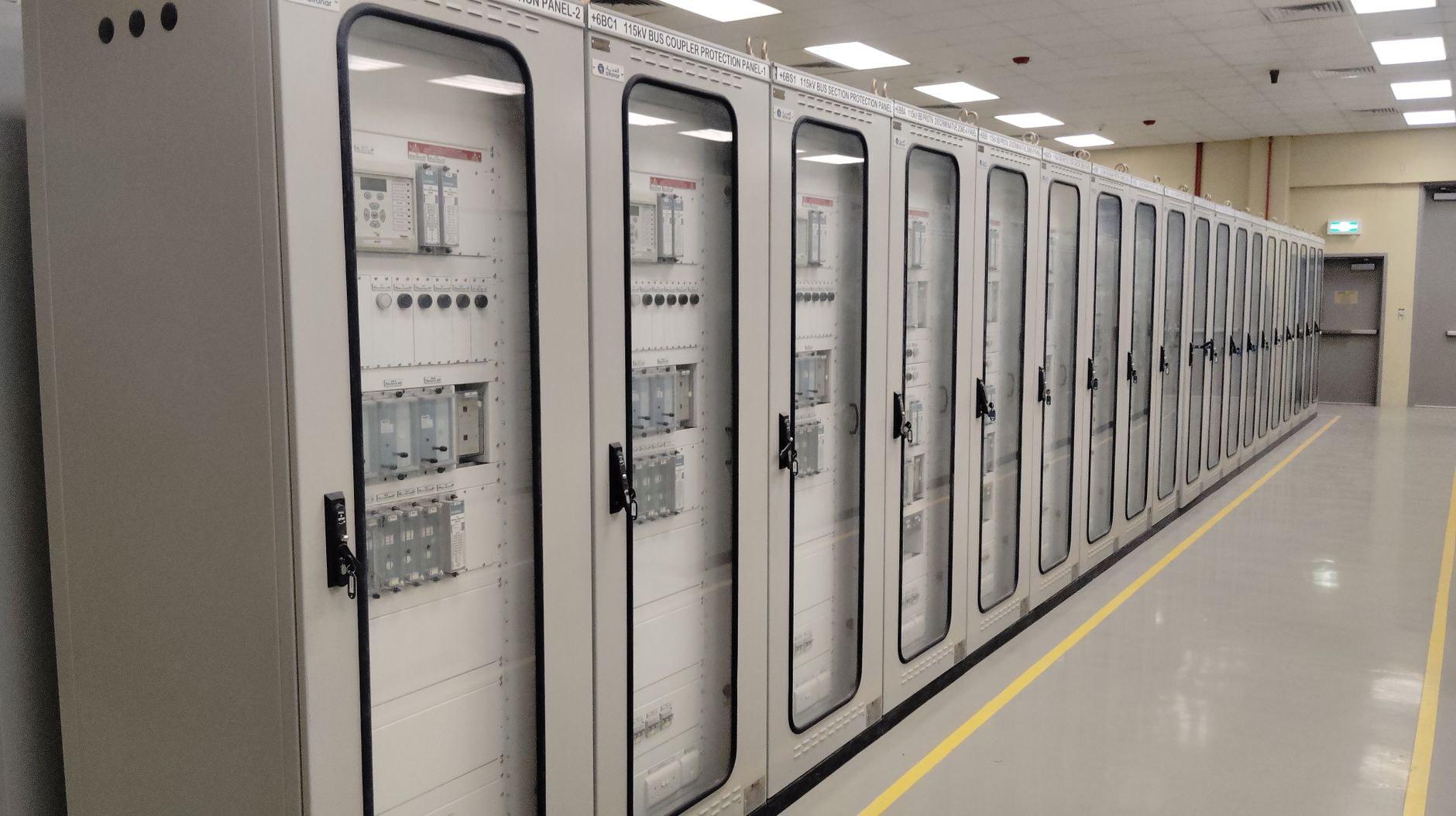
Most dealership fixed-ops managers think showroom batteries die because the vehicles "just sit." They don't. They die because somebody plugged a 2-amp consumer maintainer into a modern vehicle pulling far more than that at rest, and everyone assumed the problem was solved.
- The DEFA Professional Showroom Charger 40-50A is a hard-wired, multi-stage unit built for permanent connection - not a portable clamp-on charger you move between cars.
- A typical multi-bay showroom install runs one day for the electrical rough-in plus mounting, with the charger positioned so cabling never crosses a walking lane.
- The single most common failure we see: a consumer trickle charger left on a display vehicle with active infotainment, telematics, and alarm draw.
- Never mix 6V and 12V chargers on the same showroom power-supply circuit - set voltage discipline per circuit before the first unit goes on the wall.
- Retractable cord reels (Alert Stamping 5020TF-4C, 8645TFI) belong in the service bays for AC power - they do not charge batteries, and coiled cords on a showroom floor are a liability.
The Situation
If you're a fixed-ops director or general sales manager in Vaughan, Brampton or Markham watching porters boost display cars before a Saturday, this walkthrough is for you. It is not for someone shopping a portable charger for a personal garage - that's a different product and a much smaller decision.
The specific pain: a flat display battery is never just a flat battery. It's a customer standing at an open driver's door while the infotainment reboots, seat memory resets, and the clock reads 12:00. That's the moment the sale cools.
What We Found
Walking a Vaughan showroom floor before a DEFA install, the pattern is almost always the same three findings. First: consumer-grade trickle chargers - 1 to 2 amps - clipped onto display vehicles and left running. On a modern vehicle with an always-on telematics module, a factory alarm, and an infotainment head unit that wakes on door proximity, a 2-amp maintainer is often losing the arithmetic. It holds voltage on paper and still lets the battery slide into deep discharge over a two-week floor rotation.
Second: cable management. Extension cords coiled on the floor, snaking between display positions, taped down with gaffer tape that peels within a week. Coiling extension cords instead of using retractable cord reels does two things - it creates a trip hazard on a glass-and-tile floor a customer is walking across in dress shoes, and it wears the insulation faster because the cord flexes at the same points every time.
Third, and this is the one that surprises people: mixed voltage on the same power-supply circuit. A store that has picked up chargers piecemeal over the years ends up with 6V units for a classic on display sharing a circuit with 12V units on the new inventory. That's a configuration mistake, not a hardware fault, and it causes intermittent behavior nobody can trace.
"The most expensive thing on a showroom floor isn't the charger - it's the second boost pack a porter has to run out with while a customer is standing there. Once you've watched that happen on a Saturday, hard-wiring a DEFA 40-50A unit stops looking like a purchase and starts looking like inventory protection." - ESN Tools Team
One more observation worth recording. In the service bays behind the showroom, the same store had generic jump starters with no ANSI-rated peak amp figure printed anywhere on the housing. On a cold-soaked diesel in February, those units fail - and then a tech is walking a boost pack across the lot in the dark.
How We Solved It
A DEFA Professional Showroom Charger 40-50A install at a multi-bay Vaughan dealership follows a repeatable sequence. Here is how the day typically runs, start to finish.
Walk the floor with the sales manager and mark every position a vehicle actually parks in - including the turntable or feature pad if there is one. Six positions means six connection points, not five plus "we'll move a cable."
The DEFA Professional Showroom Charger 40-50A is specified because it has to overcome continuous parasitic load AND recover a battery that's already been drawn down - not just float it. A 30A unit suits lighter display duty; the 40-50A covers heavier-draw modern inventory with margin.
Decide the voltage discipline per circuit on paper first. If a heritage or classic vehicle needs 6V support, it gets its own supply - never shared with the 12V showroom bank.
DEFA Professional chargers are hard-wired units. In Ontario that means the connection work belongs to a licensed electrical contractor working to the Ontario Electrical Safety Code - this is not a plug-and-play retail item.
The charger goes on the wall or a column above sightline. Output cable drops down and reaches the vehicle from the least-trafficked side, so nothing crosses the path a customer walks to open a driver's door.
Alert Stamping retractable extension cord reels - the 5020TF-4C (20ft, 12/3, 15A, four outlets) over prep bays and the 8645TFI (45ft, 12/3, 20A) over deeper service bays - replace the coiled floor cords. These deliver AC power only; they are not chargers.
Connect, verify the charger enters its charge stage, then confirm it settles into maintenance. Write the disconnect-and-reconnect routine on a laminated card for the porters - that card is what keeps the system working in month eleven.
The back-up layer nobody plans for
Even with a full DEFA showroom charger bank installed, a Vaughan dealership still needs mobile power for the lot - trade-ins arriving flat, vehicles staged outside, delivery prep in the far corner where no wall exists. That's where the DEWALT DXAEPS14-Type2 earns its space: 2000 peak amps, a 500W AC inverter, a 120 PSI digital compressor, and USB-A/USB-C output in one carryable unit. The DEWALT DXAEJ14-Type3 covers the same lot-side role with a 120 PSI digital compressor and USB power.
Note the inverter figure carefully. Sizing a power inverter by peak load and ignoring continuous-rating headroom is one of the most common purchasing mistakes we see - a 500W continuous inverter running a 480W tool is a unit living on the edge of shutdown. Buy for the continuous number.
What This Means for Dealership Fixed-Ops and Sales Managers
The first lesson from a DEFA showroom charger installation in Vaughan is that amperage is a drain calculation, not a battery-size calculation. A dealership manager will look at a 60Ah battery and reason that 2 amps must be enough. It isn't, because the battery isn't the load - the vehicle's sleeping electronics are. Telematics, alarm, keyless entry receivers, and an infotainment unit that wakes on approach add up to a continuous draw a consumer trickle charger was never designed to outrun.
The second lesson is about who does the work. DEFA Professional chargers in the 30A, 40-50A, 50A and 125A range are hard-wired equipment. Ontario requires electrical work to be done by a licensed electrical contractor and, where applicable, notified to the Electrical Safety Authority. A dealership that treats a hard-wired charger like a retail plug-in item ends up with an installation that won't pass an insurance review. Get the electrician in the scoping conversation on day one.
The third lesson is unglamorous and it's the one most stores skip: write the routine down. A charger bank that nobody knows how to disconnect properly becomes a charger bank that porters unplug and never plug back in. One laminated card per position. That's it.
DEFA Professional Charger Line - Which Amperage Goes Where
DEFA Professional chargers are sold across showroom and workshop ratings, and picking the wrong tier is the most common ordering error at a multi-bay dealership in Vaughan, Mississauga or Hamilton. This table maps each unit to the role it genuinely fits - no single model wins every application.
| Unit | Best-fit role | Where it wins |
|---|---|---|
| DEFA Professional Showroom Charger 30A | Lighter display duty | Compact showrooms, lower-draw inventory, budget-constrained first phase |
| DEFA Professional Showroom Charger 40-50A | Multi-bay showroom floor | Modern high-draw inventory, long floor rotations, permanent hard-wired positions |
| DEFA Professional Workshop Charger 30-35A / 35A | Service bay support | Diagnostics and module programming where voltage must stay stable |
| DEFA Professional Workshop Charger 50A | Heavy workshop duty | Extended bench work, larger batteries, back-to-back service jobs |
| DEFA Professional Workshop Charger 125A | High-current support | Long programming sessions and heavy-load bays where 50A isn't enough |
| BLACK+DECKER BC25BD (25A, 12V) | Bench charging | Portable bench work on removed batteries - not a permanent showroom fixture |
| DEWALT DXAEC2 (2A) / DEWALT 12V 4A waterproof | Low-draw maintenance | Powersports, stored personal vehicles, and low-parasitic units - not modern showroom display cars |
Read that last row twice. The DEWALT DXAEC2 is a genuinely good 2-amp professional charger - for the job it's built for. Putting it on a display SUV with active telematics is asking a good tool to do a job it was never designed for, and that mismatch is what strands showroom cars.
What This Kind of Install Typically Costs
A DEFA showroom charger installation at a multi-bay dealership in Vaughan carries three cost lines, and only one of them is the charger. Budget for the hardware, the licensed electrical labour, and the cable-management hardware in the bays behind the floor.
On the electrical labour side, GTA licensed electrical contractors typically quote in the range of $95-$150 per hour, with commercial-project rates varying by scope, height access, and after-hours scheduling - most showroom installs are booked after close so the sales floor isn't disturbed. Confirm current pricing directly with your contractor; those are category norms, not our quoted rates.
On the hardware side, contact ESN Tools for current DEFA Professional pricing across the 30A, 40-50A, 50A and 125A units - we won't publish a figure here that could be stale by the time you read it. The cost-per-vehicle math that matters is simpler than most stores expect: compare the per-position charger investment against the replacement cost of batteries killed on your own floor, plus the labour hours porters burn boosting.
The Mistakes That Cost the Most
Across dealership and detailing accounts in Vaughan, Brampton, Markham and out to Hamilton, the same six errors repeat. Every one of them is preventable at the quoting stage.
- Consumer trickle charger on a display vehicle. Insufficient amperage to overcome parasitic drain from infotainment plus alarm. The battery still dies - just slower.
- Coiled extension cords on the floor. Trip hazard on a customer-facing surface, and insulation wears at the repeat flex points. Retractable reels fix both.
- Inverter sized by peak load. Ignoring continuous-rating headroom gets you a unit that shuts down under real tool load.
- Generic jump starters with no ANSI-rated peak amps. They fail on cold-cranking diesels - exactly when you need them, in a Vaughan January.
- Non-IP-rated lighting in wash bays. Fixtures fail within months. Rate the fixture for the environment.
- Mixing 6V and 12V chargers on one showroom power-supply circuit. Configuration error, not a hardware fault, and painful to diagnose after the fact.
Honestly, the 6V/12V one caught us off guard the first time we traced it. Everyone assumes it's the charger. It's the circuit plan.
Frequently Asked Questions
Can our dealership's maintenance staff install a DEFA Professional 40-50A showroom charger themselves?
DEFA Professional showroom chargers are hard-wired units, so the electrical connection must be completed by a licensed electrical contractor working to the Ontario Electrical Safety Code. Your maintenance staff can handle mounting prep, position marking, and daily operation - but the supply connection is licensed work in Ontario, and the Electrical Safety Authority governs notification requirements for commercial installations.
Why did our 2-amp charger fail on showroom vehicles when it works fine on a stored car?
A 2-amp charger like the DEWALT DXAEC2 works well on a stored vehicle with minimal parasitic draw, but a showroom display car keeps infotainment, telematics, and the factory alarm active. That continuous drain can exceed what a 2-amp maintainer replaces, so the battery slides downward over a multi-week floor rotation. The DEFA Professional Showroom Charger 40-50A is specified precisely because it has the headroom to both cover drain and recover a depleted battery.
Do Alert Stamping cord reels charge batteries in the service bays?
No - Alert Stamping models like the 5020TF-4C (20ft, 12/3, 15A, four outlets), 5020TFC (20ft, 15A, single outlet) and 8645TFI (45ft, 12/3, 20A) are retractable extension cord reels that deliver and retract AC power only. They do not charge or maintain batteries. Battery work at a Vaughan dealership is handled by the DEFA Professional chargers, the BLACK+DECKER BC25BD 25A bench charger, or a DEWALT jump starter for lot-side recovery.
How long does a multi-bay showroom charger installation take, and does the floor have to close?
A typical DEFA Professional showroom charger installation at a multi-bay Vaughan dealership is scheduled as a single-day electrical job, most commonly booked after close so the sales floor never shuts during business hours. The actual duration depends on how far the supply run is from the panel, whether lift access is needed for high mounting, and how many display positions are being served - six positions takes noticeably longer than two.
Sources
- Licensed electrical contractor requirements and notification rules in Ontario - Electrical Safety Authority (ESA)
- DEFA Professional showroom and workshop charger product line - DEFA
- DEWALT jump starter and battery charger specifications (DXAEPS14, DXAEJ14, DXAEC2) - DEWALT
- Product availability, model confirmation, and current DEFA pricing in Canada - ESN Tools
ESN Tools
Automotive electrical equipment and showroom battery maintenance for dealerships, detailers, and service shops across Canada.
Scope Your DEFA 40-50A Showroom Charger Install →- How an Edmonton Multi-Location Dealership Standardized Battery Maintenance Across 3 Service Bays With the DEFA
- DEFA Professional Showroom Charger vs DEWALT DXAEC2: Which Battery Maintainer Fits a Canadian Dealership Bay
- How a Calgary Auto Dealership Kept 18 Showroom Vehicles at Full Charge All Winter Using DEFA Professional Char
- DEFA Showroom Battery Charger Cost Per Vehicle in 2026 — What Multi-Location Canadian Dealership Groups Actual
- How a Mississauga Dealership Solved Showroom Battery Drain on 18 Display Vehicles Using DEFA Professional Char