

Last updated: May 20, 2026
A 2,000-watt peak-rated power inverter will start most diagnostic equipment, but it won't keep it running reliably—because peak wattage and continuous load are two completely different measurements, and that gap is where mobile mechanics get stranded on a frozen Brampton driveway waiting for roadside backup.
The question itself reveals why so many service vehicles carry underpowered inverters: they buy based on the biggest number on the box. A power inverter diagnostic equipment setup needs to handle not just initial surge, but the sustained draw of a code scanner, battery tester, or oscilloscope running for 20 minutes while you're parked on the shoulder. Most consumer 2,000-watt inverters deliver only 1,200–1,400 watts continuously—enough to start equipment but not enough to run it.
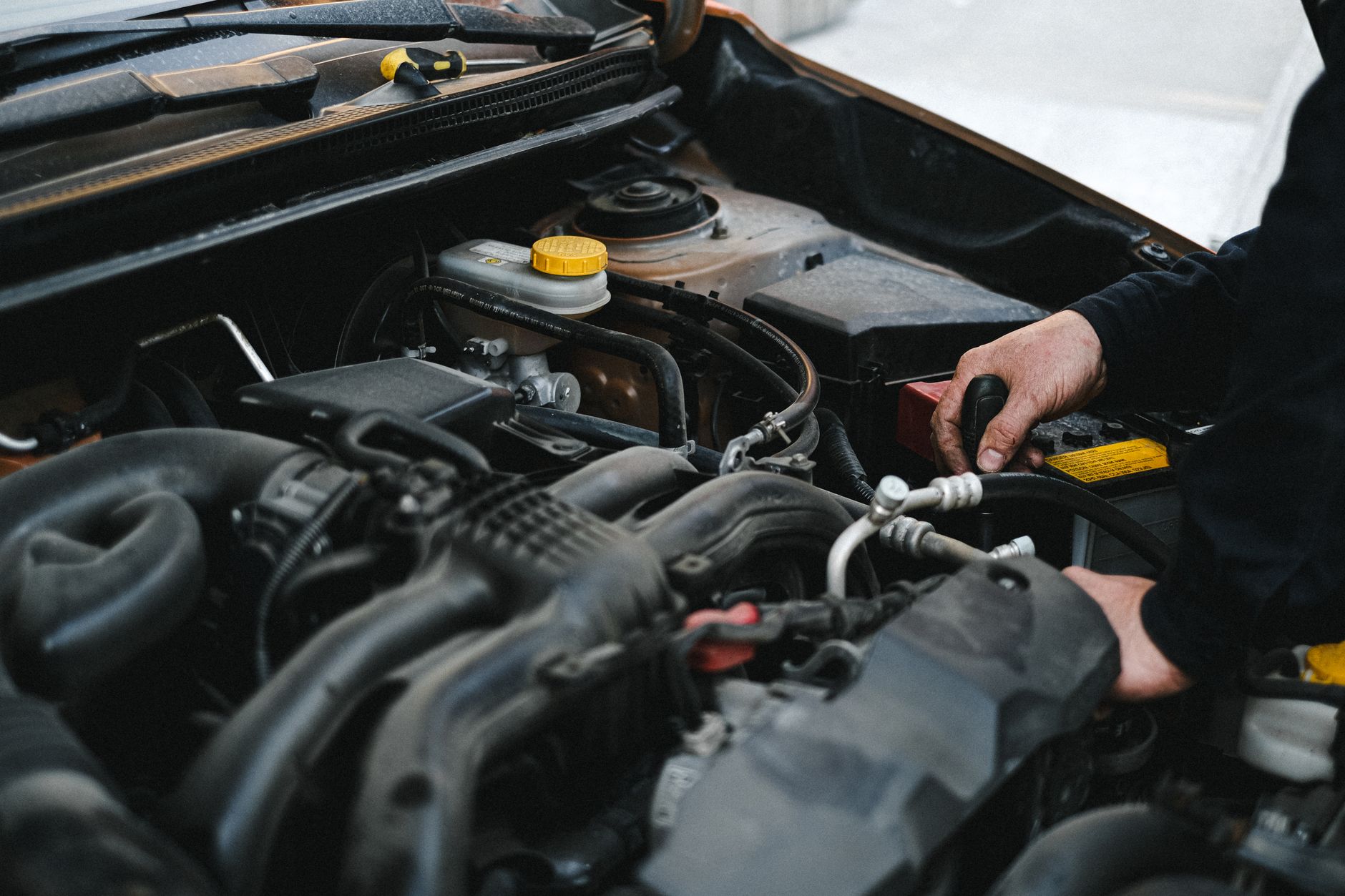
- Peak wattage (2,000W) is not continuous wattage—look for the 30-minute continuous rating instead.
- Diagnostic scanners, battery load testers, and heated probes can draw 800–1,500W sustained; a marginal inverter will shut down mid-test.
- The DEWALT DXAEPS14-Type2 portable power station delivers 1,400 peak amps and 400W inverter output, eliminating the gap between surge and sustained load.
- Cold weather cuts inverter efficiency by 15–20%; a 2,000W inverter in a Calgary February becomes a 1,600W inverter in practice.
The Short Answer: Peak ≠ Continuous
A 2,000-watt inverter will handle brief power-on surges from a scanner or tester, but the continuous-duty rating is what matters for diagnostic work. Most consumer-grade 2K inverters sustain only 1,200–1,400 watts—below the real-world draw of professional automotive power inverter diagnostic equipment. For mobile service calls, you need either a larger inverter (3,000W continuous minimum) or a dedicated power station like the DEWALT DXAEPS14-Type2, which skips the inverter problem altogether by supplying clean 12V direct from onboard battery capacity.
Honest moment: I didn't believe this mattered until a technician in Hamilton called at 8:47 AM saying his inverter had cut out mid-test on a Honda Accord's electrical system. He'd bought a 2K inverter, the label said 2,000 watts, and he assumed that was the number that mattered. It wasn't.
The Full Answer: Why 2,000 Watts Isn't Enough—And What Actually Works
Peak Wattage vs. Continuous Rating: The Marketing Trap
Every inverter on the shelf shows two numbers: peak wattage and continuous wattage. Peak is the absolute maximum the device can deliver for 3–10 seconds—like the startup surge of a compressor. Continuous is what it can sustain indefinitely without shutting down or throttling back. A 2,000-watt peak inverter typically delivers 1,200–1,400 watts continuous. That's not deceptive marketing; it's physics. But it is a gotcha for anyone running power inverter diagnostic equipment that needs to work for 15–30 minutes straight.
Here's the trap: a code scanner looks small. A battery load tester looks simple. You assume they won't draw much power. In practice, a professional-grade Bosch or Snap-on scanner draws 400–600W while scanning. Add a heated probe or an oscilloscope, and you're at 1,000–1,500W sustained. A 2K inverter with 1,200W continuous headroom will brown out, stutter, or shut down entirely within 5–10 minutes.
Real-World Diagnostic Equipment Load Draw
Most mobile mechanics don't know the wattage draw of their own tools. Here's what ESN Tools sees in the field:
| Equipment | Typical Wattage (Sustained) | Duration |
|---|---|---|
| Code scanner (Snap-on, Bosch) | 400–650W | 15–25 min |
| Battery load tester (inductive) | 300–500W | 10–15 min |
| Oscilloscope (automotive, 4-channel) | 150–300W | 20–30 min |
| Heated probe / inductive clamp sensor | 200–400W | 5–10 min |
| Multiple tools running simultaneously | 900–1,500W | Varies |
A typical roadside diagnostic call involves a scanner (500W) + a battery tester (400W) running at the same time. That's 900W sustained. Your 2K inverter with 1,200W continuous rating is comfortable. But add a heated probe, a second tech running a laptop, or any voltage monitoring and you're over the edge. The inverter throttles, performance drops, and you're calling for a tow truck.
The DEWALT DXAEPS14-Type2: A Better Solution for Mobile Diagnostics
Instead of wrestling with an inverter, the DEWALT DXAEPS14-Type2 Portable Power Station delivers 1,400 peak amps and a 400-watt pure-sine-wave inverter output. More importantly, it supplies clean 12V DC directly from an internal battery pack—no conversion losses, no continuous-rating headroom concerns. A mobile mechanic runs diagnostic tools off the 12V outputs or the 120V AC inverter, depending on tool requirements.
The DXAEPS14-Type2 isn't just an inverter replacement; it's also a jump starter, so a dead battery on a customer's vehicle doesn't force you to call for backup. You start the car, run your diagnostics, and you're done. For mobile service shops across the Greater Toronto Area, Mississauga, and Calgary, this combination eliminates the inverter-wattage guessing game entirely.
Cold Weather and Inverter Efficiency Loss
Winter in Canada kills inverter performance. A 2,000-watt inverter that delivers 1,200W continuous in a heated garage will drop to 1,000–1,050W when you're parked on an Edmonton or Winnipeg roadside in February. Battery voltage sags in cold, inverter efficiency drops, and your margin of safety evaporates. A call that worked fine in May becomes impossible in January.
If you're running power inverter diagnostic equipment in winter, you need at least 3,000W peak inverter capacity (delivering 2,000W continuous)—or you rely on a power station like the DXAEPS14-Type2 that uses direct 12V output instead of AC conversion.
Inverter Quality: Sine Wave Matters
A 2,000-watt modified-sine inverter is cheaper, but it'll damage sensitive scanner electronics over time. Professional diagnostic scanners require pure sine wave output. A cheap modified-sine inverter creates harmonic noise that corrupts voltage readings and can crash code scanners mid-test. Buy pure sine wave, or don't bother.
Why 3,000+ Watts Is the Safe Minimum for Serious Mobile Work
If you're committed to an inverter-based setup, go 3,000W peak minimum. That delivers roughly 2,000W continuous—giving you 500W of headroom above typical dual-tool diagnostics, plus insurance against cold-weather efficiency loss and unexpected load spikes. A 3,000W pure-sine inverter runs $800–$1,400. That's more than a DEWALT DXAEPS14-Type2, which integrates jump-start capability and costs $600–$750, making the power station a smarter choice for mobile mechanics working across Ontario, Alberta, and beyond.
When the Answer Is Different: Edge Cases and Exceptions
If your diagnostic toolkit is 12V only (all cordless tools, 12V lights, DC clamp meters), a 2,000W inverter is overkill—you don't need it. Run everything off a deep-cycle auxiliary battery with a quality 12V-to-12V charger. No inverter, no wattage headache.
If you only ever run a single tool (one scanner, period), and that tool is rated for 400W or less, a 2,000W inverter is technically adequate. But most mobile mechanics expand their toolkit over 12–24 months. You'll eventually hit the wall when a second tool or a battery load tester gets added to the van.
If your vehicle has 240V onboard power (rare in service vehicles but possible in larger commercial rigs), you can skip the 120V inverter entirely and use a true portable power supply like a DEWALT station that supplies both 12V and 120V in one package.
Frequently Asked Questions: Power Inverter Diagnostic Equipment
1. Can I use a 2,000-watt inverter if I run one tool at a time?
Technically, yes—if that one tool draws under 1,200W sustained, the inverter won't throttle. In practice, mobile mechanics run multiple tools simultaneously (scanner + tester, or scanner + laptop), so a 2K inverter becomes a bottleneck within months. Start with at least 3,000W, or skip the inverter and use a DEWALT portable power station instead.
2. What's the difference between pure sine wave and modified sine wave inverters?
Pure sine wave inverters output AC current that matches utility power—safe for sensitive electronics like automotive diagnostic scanners. Modified sine wave is cheaper but creates harmonic distortion that can corrupt code-reader data and damage scanner circuitry over time. For professional automotive work, pure sine wave is non-negotiable.
3. Does running the inverter off the truck's alternator while the engine is running work?
No reliably. A truck's alternator produces 90–150 amps (roughly 1,200W max at 12V), and under sustained 1,000W+ load, voltage sags and the alternator overheats. Use a dedicated auxiliary battery isolated from the starting battery, or invest in a power station that carries its own battery pack.
4. Will a 2,000-watt inverter work better in summer than winter?
Yes. Cold weather reduces inverter efficiency by 15–20% because battery voltage sags at low temperature, forcing the inverter to work harder. A 2K inverter delivering 1,200W continuously in summer may deliver only 1,000W in a Calgary or Winnipeg winter. This is why professional mobile shops upgrade to 3,000W+ or switch to a power station for year-round reliability.
The Bottom Line: Right-Size for Reliability
A 2,000-watt power inverter will start most diagnostic equipment but won't keep it running reliably. The gap between peak wattage (2,000W) and continuous output (1,200–1,400W) is where mobile mechanics get stuck on the roadside. Professional automotive diagnostics require either a 3,000W+ pure sine wave inverter or a integrated power station like the DEWALT DXAEPS14-Type2, which eliminates the conversion entirely by supplying clean 12V DC directly from onboard battery capacity.
If you're buying a power inverter diagnostic equipment setup for mobile work, right-size for sustained demand—not just peak surge. Add 30–50% headroom above your heaviest combined load. And if you're already in the $600–$800 budget range for a good inverter, the DEWALT portable power station is worth the comparison; it solves the inverter-wattage problem completely.
Get the Right Power Solution for Roadside Diagnostics
ESN Tools stocks the DEWALT DXAEPS14-Type2 and professional-grade inverters for mobile mechanics across Canada. Talk to our team about sizing for your specific toolkit.
Find the Right Power Station for Your Mobile Service →This article was drafted with AI assistance to ensure factual accuracy.