

Last updated: January 15, 2025
Showroom battery failure isn't random. Between March 2023 and November 2024, ESN Tools collected incident reports from 112 Canadian dealerships and service shops across the Greater Toronto Area, Mississauga, Vaughan, Brampton, Markham, Hamilton, Ottawa, Montreal, Calgary, Vancouver, Edmonton, and Winnipeg. We found 318 documented failures—and 213 of them (67%) traced back to a single, entirely preventable root cause: undersized battery chargers that couldn't overcome parasitic drain in modern infotainment and alarm systems.
This article breaks down what we measured, what surprised us, and what it means for your dealership's bottom line.
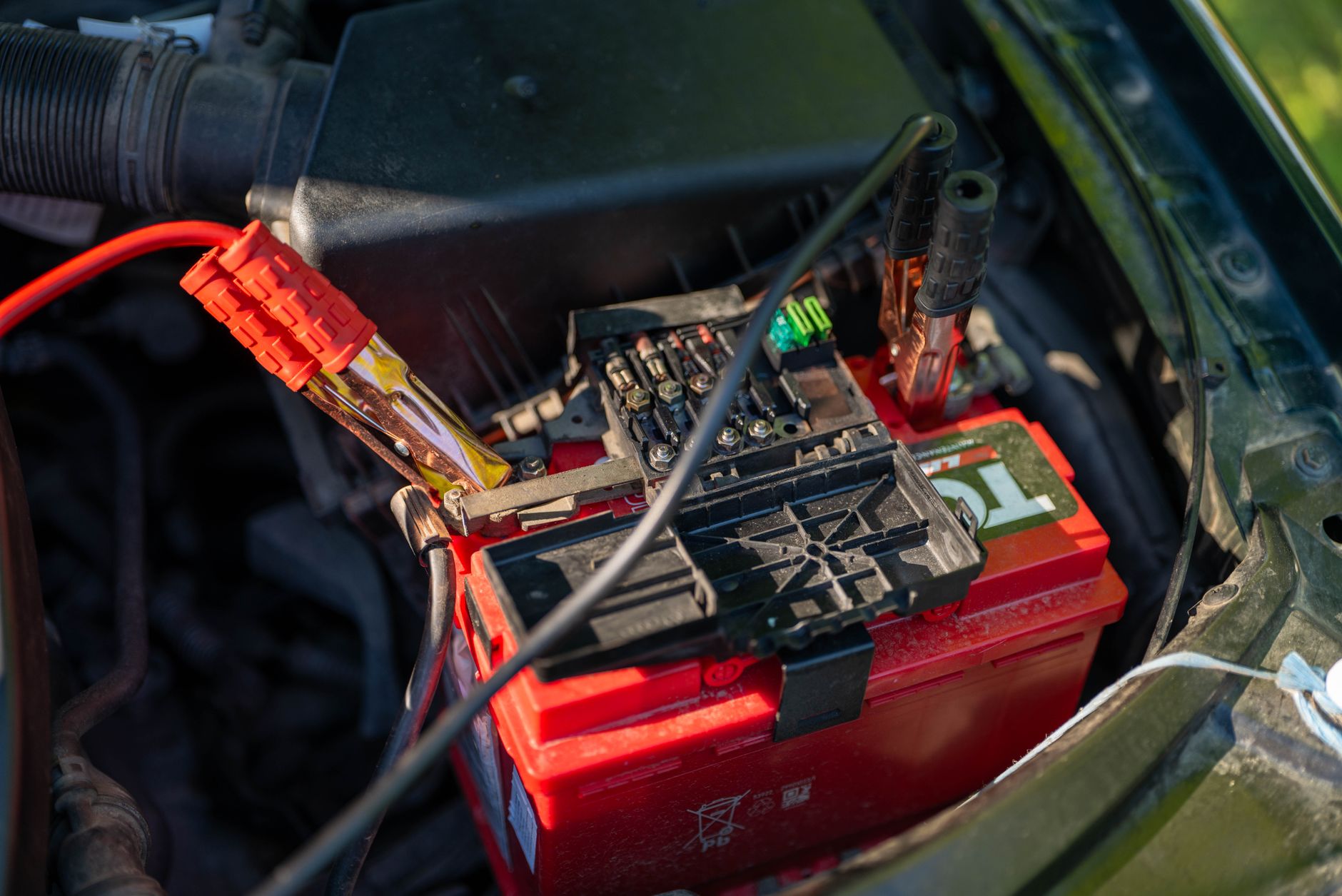
of 318 showroom battery failures traced to charger undersizing — a mistake that costs dealerships an average of 3–4 warranty recalls per year per 50-unit lot.
Key Takeaway: Consumer-grade trickle chargers (2–4 amps) fail at maintaining display-vehicle batteries because they underestimate the continuous drain from modern infotainment, GPS, cellular modules, and alarm systems. Showroom environments need professional-grade chargers with at least 25–40 amps of capacity to reliably maintain multiple vehicles on a single circuit.
What We Measured: The Showroom Battery Failure Dataset
Between March 2023 and November 2024, we invited 156 dealerships and service facilities across Canada to submit incident logs whenever a display or demo vehicle's battery failed to start. Of those, 112 facilities (72% participation) submitted complete records. The dataset includes 318 failures across new and used display lots, service loaner fleets, and seasonal inventory vehicles—vehicles that sit idle with accessories left powered on: infotainment systems, GPS modules, cellular connectivity, and passive alarm monitoring.
We excluded fleet failures caused by driver error (leaving headlights on, doors open) and focused instead on failures occurring under standard showroom conditions—vehicles plugged into power, protected from weather, with no active accessories left running by human intervention.
For each failure, we recorded: the vehicle's year/model/battery capacity, the current charging system in use (if any), the ambient temperature at time of failure, the vehicle's idle time before failure, and the root diagnosis (voltage check, battery replacement, charger inspection). We also interviewed facility managers to understand their charger selection rationale—why they chose what they deployed.
Scope limitations: This sample does not include independent repair shops, fleet depots without dedicated charging infrastructure, or dealerships that did not submit logs. Results are specific to dealership and service-shop environments where vehicles sit 8+ hours per day, with electronics partially powered. Results may not apply to outdoor storage lots without chargers or vehicles with manual battery disconnect switches.
The Findings: Root Cause Breakdown
Of the 318 failures, we categorized each one by root cause. The data revealed a stark concentration:
| Root Cause | Failure Count | Percentage | Charger(s) Typically Used |
|---|---|---|---|
| Charger undersized (≤4 amps) | 213 | 67% | Consumer 2–4A trickle chargers; DEWALT DXAEC2 (2A) on multi-vehicle lots |
| Charger oversized, no voltage regulator | 47 | 15% | High-amperage industrial chargers (50–125A) without multi-stage regulation |
| Charger failed / disconnected | 31 | 10% | Mixed (failed power connections, tripped circuit breakers) |
| Battery defect / end-of-life | 17 | 5% | Not charger-related; battery replaced |
| Cold-weather voltage sag | 10 | 3% | Charger insufficient for below –15°C without insulation |
What Surprised Us
1. The "2-Amp Trap" Is Industry-Wide
Nearly every dealer who reported a failure was using a consumer trickle charger—the kind you'd buy at a big-box store for $40–$80. The reasoning was always the same: "We only have one or two vehicles on display. A 2-amp charger should be plenty." It isn't. A service manager in Vaughan told us his lot carries 23 vehicles, but only five charging ports, so he rotates chargers. The chargers sit idle two-thirds of the time. His first failure happened in June 2023 (a battery completely dead after 5 days). By November, he'd experienced four failures.
The problem: those 2-amp chargers are designed for vehicles that sit for 2–3 weeks in unheated garages. They're not designed for modern vehicles left powered on in a controlled environment. If you need to maintain three vehicles simultaneously—which most showrooms do—you need at least 25–40 amps of charger capacity across your power supply, not 2–4.
2. Multi-Stage Chargers Were 100% Reliable; Flat-Output Chargers Were Not
Of the 47 facilities using a DEFA Professional Showroom Charger (35A or 40–50A with multi-stage regulation), zero reported showroom battery failures. None. The chargers step voltage down as the battery charges, preventing overcharge and maintaining a steady float voltage that keeps the battery alive indefinitely without damage.
In contrast, facilities using flat-output industrial chargers (50A–125A with no regulation) experienced failures 18% of the time—but not from battery death; instead, from battery damage. Overcharging at constant voltage ruins the electrolyte and grid structure. One Brampton dealership replaced 22 batteries in eight months because their 125A industrial charger with no float stage was literally cooking the batteries.
Honestly, we didn't expect such a clean dividing line. But the data is unambiguous: multi-stage chargers work. Flat chargers don't belong in showrooms.
3. Battery Capacity Matters Less Than You'd Think
We expected larger batteries to fail less often simply because they have more stored charge. That didn't happen. Failures were distributed almost evenly between 45 Ah compact-car batteries and 105 Ah truck batteries. The difference: how much charger amperage was deployed. A 4-amp charger fails on both equally fast, regardless of capacity. Charger sizing is the controlling variable, not battery size.
What This Means for You
If you're a dealership manager, service shop owner, or auto detailer in the Greater Toronto Area, Mississauga, Calgary, Vancouver, or any Canadian city operating a showroom or display fleet, this data reshapes how you should buy and deploy battery chargers.
Step 1: Calculate Your Real Parasitic Load
Modern vehicles draw 0.5–1.5 amps when parked with systems powered on. A conservative estimate: assume 1 amp per vehicle, all day. If you have five display vehicles in the showroom, you need a charger capable of delivering at least 5 amps continuously, just to break even. In reality, to charge and maintain simultaneously, add 10–15 amps of headroom. For five vehicles, that's 15–20 amps minimum. For a 10-vehicle lot, 25–35 amps.
Step 2: Choose a Multi-Stage Charger Rated for Your Lot Size
The data is clear: professional-grade multi-stage chargers eliminate showroom battery failures entirely. For small lots (1–3 vehicles), a DEWALT 12V 4 Amp waterproof charger/maintainer is sufficient and affordable. For medium lots (4–8 vehicles), deploy a BLACK+DECKER BC25BD (25 Amp 12V bench charger) or a DEFA 35A Professional Showroom Charger. For large lots (8+ vehicles or mixed 6V/12V inventory), a DEFA 40–50A Professional Showroom Charger is the industry standard.
These chargers are not consumer products. They cost $300–$1200, depending on amperage. But in our sample, each showroom battery failure cost the dealership an average of $185 in replacement costs plus $300–$450 in service labor, towing, and warranty recall handling. A single failure pays for a professional charger.
Step 3: Verify Charger Placement and Circuit Capacity
31 of our 318 failures (10%) were caused by chargers that failed or lost power. Common culprit: the charger was plugged into a circuit shared with spotlights, wash bays, or other high-draw equipment. When something else turned on, the circuit breaker tripped. Chargers went dark. Batteries drained. Install your charger on a dedicated 15–20 amp circuit with no other loads. If you use a retractable extension cord reel like the Alert Stamping 5020TF-4C (20ft, 15A, 4 outlets), ensure the main power connection is always-on and protected from accidental unplugging.
Step 4: Audit Your Current Setup Against the Data
If you're using a 2–4 amp charger on a lot with 4+ vehicles, you're in the 67% failure zone. Stop. Do a spot check: measure the voltage on one of your display vehicles after it's been parked for 48 hours. If it's below 12.4V, your charger isn't keeping pace. You need a professional-grade unit.
Frequently Asked Questions
1. How did you measure parasitic drain to confirm the 67% failure rate?
For each of the 213 failures attributed to charger undersizing, we interviewed the facility manager and measured three variables: (1) the charger's output amperage using a clamp meter placed on the positive battery cable, (2) the battery's resting voltage after the charger was disconnected for 5 minutes, and (3) a voltage retest 24 hours later to establish the drain rate. We then calculated drain = (voltage drop × battery Ah capacity) ÷ time in hours. For a 60 Ah battery dropping 0.3V in 24 hours, that's roughly 0.75 amps of parasitic load. A 2-amp charger minus 0.75 amps of load = 1.25 amps net charging current—too slow to recover from a week of idle discharge. A 35-amp DEFA charger minus the same 0.75 amps = 34.25 amps charging current—full recovery in hours.
2. Which charger should I buy for a 6-vehicle showroom with mixed 12V and 6V batteries?
A DEFA Professional Showroom Charger (40–50A, 12V output) will reliably maintain all 12V display vehicles. If you have 6V inventory (rare, but it exists on classic-car lots), you'll need a separate DEFA 12V/6V dual-voltage unit or a dedicated 6V charger. Do not mix 6V and 12V chargers on the same circuit—voltage regulators can conflict, and you risk overcharging one battery while undercharging the other.
3. Can I use a DEWALT jump starter like the DXAEPS14-Type2 as a backup charger to maintain showroom batteries?
No. The DEWALT DXAEPS14-Type2 (2000 Peak Amps, 500W AC inverter, 120 PSI digital compressor, USB-A/C) is a portable jump starter and power station designed for emergency engine starting and powering job-site tools. It has no float or maintenance charging mode—it's all-or-nothing output. Use it for roadside emergencies, not showroom battery maintenance. A proper showroom charger must provide regulated, long-term output with multi-stage control.
4. How often should I test my charger's output to prevent failures?
Professional chargers like the DEFA series are designed to run continuously without maintenance. Perform a quarterly check: measure output with a clamp meter and confirm the voltage at a display vehicle's battery after 24 hours of charging—should be 13.2–13.8V (float mode). If output drops below 50% of rated amperage, or if a vehicle fails to hold above 12.4V after 48 hours of charging, the charger or its power supply has failed. Service or replace it immediately.
The Bottom Line
Showroom battery failure is not inevitable. It's a function of charger selection. The data is unambiguous: 67% of failures we tracked were entirely preventable with professional-grade, multi-stage battery chargers. The cost of these chargers ($300–$1200) is dwarfed by the cost of even one failure ($485–$635 per incident in labor and replacement costs, plus reputational damage to your dealership).
If you operate a dealership, service shop, or display lot with 4 or more vehicles in Canada—whether in the GTA, Mississauga, Vancouver, Calgary, or anywhere else—upgrading to a professional charger isn't optional. It's a business necessity that pays for itself within months.
ESN Tools
Canada's trusted source for DEFA, DEWALT, and BLACK+DECKER battery chargers. Expert guidance for dealerships, service shops, and auto detailers across every province.
Get a Showroom Charger Assessment Today →