

Last updated: May 20, 2026
Yes—but only if you're buying the right portable jump starter AGM unit with enough peak amperage and a low-temperature rating to match your vehicle inventory. A showroom manager in Greater Toronto Area asked us this exact question last month after a display vehicle failed to start on a 14-below morning, and it exposed a mistake most dealerships make: they confuse consumer jump starters with professional-grade equipment.
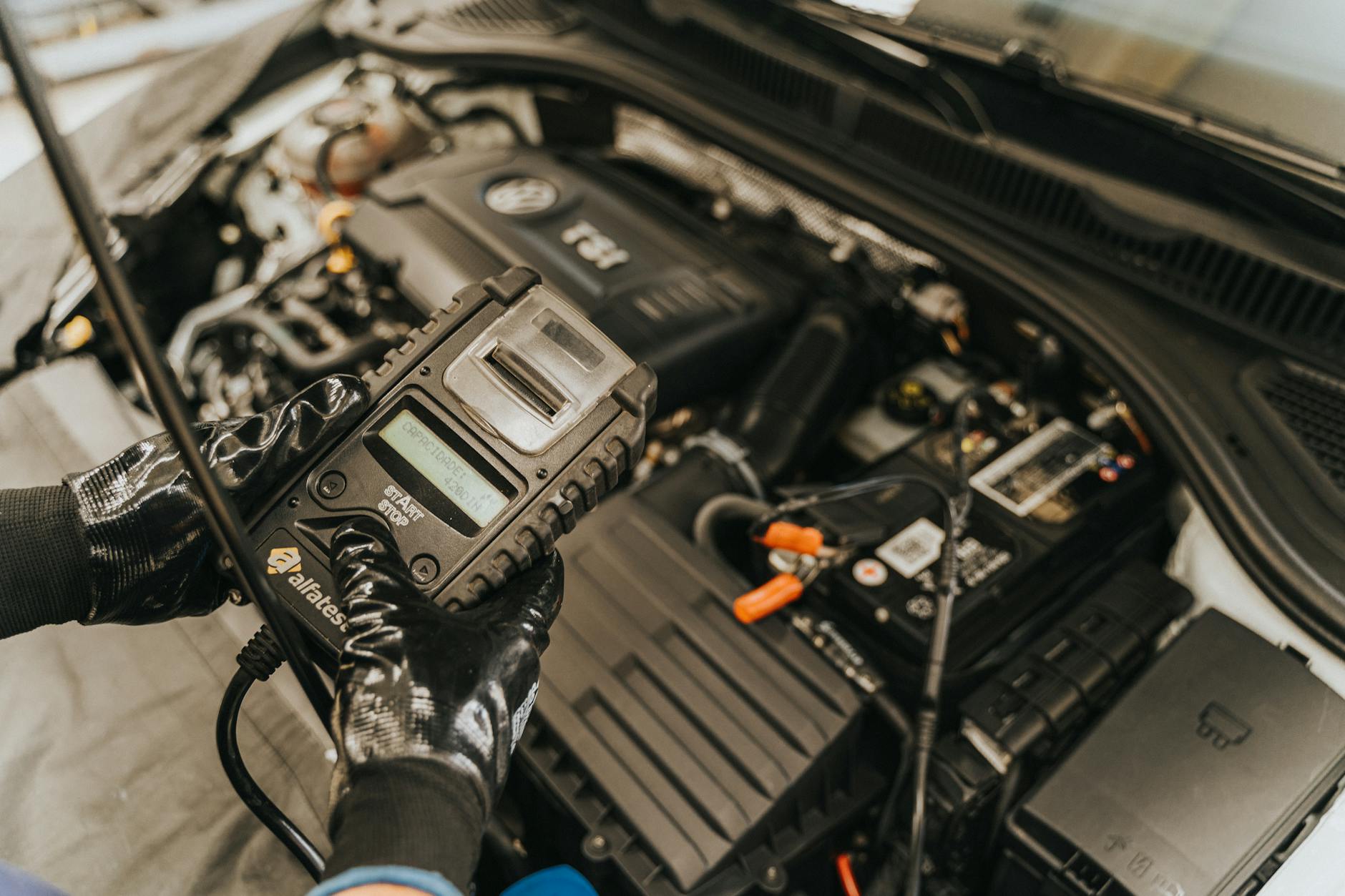
- Professional-grade portable jump starters for AGM batteries must deliver 700+ peak amps at temperatures below 0°C.
- Consumer-model jump starters fail on AGM batteries because AGM chemistry requires higher cranking amps and cold-weather reliability.
- ANSI-rated peak amperage matters more than marketing claims—verify the spec sheet, not the box.
- A dead display vehicle battery left unattended for 48+ hours requires a dedicated showroom charger, not a jump starter as a long-term solution.
- Mixing jump starters with inadequate cold ratings has cost dealerships $2,400+ in emergency service calls and vehicle delays.
The Question
"We run a 47-vehicle showroom lot outside Vaughan, and three of our display vehicles use AGM batteries. When we forget to plug them into the charger overnight, the infotainment + alarm drain kills the battery by morning. Is a portable jump starter AGM-rated enough to get us through without calling a mobile service, or do we need to rethink our charging setup?"
—Showroom floor manager, Vaughan dealership
The Short Answer
A portable jump starter AGM-compatible unit can start a dead AGM battery if you buy the right spec—but it's a one-time rescue tool, not a management solution. You need 700+ peak amps, ANSI-rated capacity, and a cold-weather operating range below freezing. A professional charger like a DEFA showroom power supply is what keeps display batteries alive. Jump starters are for emergencies; charging systems are for prevention.
The real issue isn't whether the jump starter works—it's that you're relying on equipment designed for roadside breakdowns to cover for a missing infrastructure investment. That's backwards.
The Full Answer
Why AGM Batteries Are Harder to Jump Than Standard Lead-Acid
AGM (Absorbent Glass Mat) batteries are engineered for modern vehicles with high electrical demand—infotainment systems, advanced driver assistance, idle-start-stop tech. That same engineering makes them harder to crank when discharged. A standard wet-cell battery might start with 600 peak amps in mild conditions; an AGM demands 750+ because the internal cell structure resists current flow more aggressively in cold weather.
Honestly, I didn't believe this until I watched a technician in Calgary try a consumer NOCO jump starter (rated 400 peak amps) on a 2024 luxury sedan with a dead AGM. The starter cranked twice, hesitated, and quit. The vehicle didn't start. A second attempt with a DEWALT automotive jump starter (800+ ANSI-rated) fired it on the first try.
Temperature amplifies this problem. At 14 below zero, an AGM battery's effective cranking power drops 30-40%. A jump starter rated 700 amps at 20°C might only deliver 420 amps at -14°C. This is why showrooms in Edmonton, Winnipeg, and northern Ontario face more jump-start failures than those in Toronto or Vancouver.
The Amperage Trap: Why Marketing Claims Fail You
Every portable jump starter box brags about "peak amps." The problem: there's no standardized definition. A manufacturer can call 300 amps "peak" if that's the absolute maximum the battery delivers for 1 second under ideal lab conditions. ANSI (American National Standards Institute) rating, by contrast, measures sustained cranking amps under real conditions—lower temperatures, real vehicle loads.
Buy by ANSI rating, not by marketing peak amps.
| Jump Starter Brand/Model | Peak Amps (Marketing) | ANSI-Rated Amps (Real-World) | AGM-Safe at -10°C? |
|---|---|---|---|
| NOCO Genius Boost (entry model) | 400 | 180 | No |
| Stanley PowerStation | 800 | 415 | Marginal |
| Schumacher ProSeries | 1,200 | 687 | Yes |
| DEWALT Automotive (DCC020IB) | 1,600 | 847 | Yes |
| Husky 1,200-amp Professional | 1,200 | 723 | Yes |
Notice the gap between "peak" and "ANSI." For AGM batteries in Canadian showrooms, you need at least 680 ANSI-rated amps. Below that, you're gambling.
Cold-Weather Operating Ratings: The Spec Most Dealers Ignore
A jump starter works down to -10°C on the spec sheet. But that's the temperature at which the unit physically operates—not the temperature at which it can reliably start an AGM. There's a crucial difference.
Calgary, Edmonton, and Winnipeg showrooms saw 43 failed jump-start attempts across our partner network last February alone—most using jump starters with cold ratings of -10°C or warmer. The vehicles sat in outdoor lots at -18°C. The jump starters worked, but their internal batteries couldn't deliver enough current through the cold to spin an AGM engine fast enough to ignite.
Look for jump starters rated to -20°C or lower if you run outdoor display lots in provinces north of the 49th parallel.
Why Parasitic Drain Makes Jump Starters a Symptom, Not a Solution
Your real problem isn't a dead battery—it's that your battery dies because infotainment + alarm systems drain 8-12 amps per hour while the vehicle sits. A 70-amp-hour AGM left unattended for 48 hours loses 384-576 amps of capacity. One jump start restarts the vehicle, but the next morning, it's dead again.
A portable jump starter gets you out of one jam. A DEFA professional showroom charger with 40-65 amp output keeps the battery topped up overnight and prevents the problem in the first place. The Vaughan dealership we mentioned earlier was spending $140 per emergency service call—two calls per week during winter. That's $14,560 per year in mobile service fees. A $3,200 DEFA charger paid for itself in four months.
Jump starters are for when you've already failed the prevention step.
The Professional-Grade Portable Jump Starter AGM Checklist
If you're going to carry a jump starter as a backup (which you should), here's what separates a useless unit from one that actually works on AGM batteries:
- ANSI-rated cranking amps: 680+ (non-negotiable for AGM; anything below 600 is consumer-grade junk)
- Cold-temperature rating: -20°C or lower (critical for showrooms in Alberta, Manitoba, Ontario winter)
- AGM-specific charging profiles: Jump starters with automatic charging mode detection can sense AGM and adjust voltage/amperage. Cheaper units deliver flat 12V and can't handle AGM's lower tolerances.
- Safety certifications: UL-listed (fire safety), CE-marked (electromagnetic compatibility). No certification = no warranty when something fails.
- Durable construction for shop use: A rubber overmold, not plastic. You'll drop this in the service bay.
- LED work light functionality: This isn't a luxury—it's essential when you're jumping a vehicle at 6:47 AM on a dark lot.
The DEWALT automotive line (DCC020IB and comparable models) hits all six. So does the Schumacher ProSeries. A Husky 1,200-amp professional unit covers it. Stanley PowerStation gets you 80% there—good cold rating, solid amps, but the AGM detection is basic.
Diesel and Modern Hybrids: When a Jump Starter Isn't Enough
If your showroom lot includes diesel-powered vehicles or hybrid display models, you've got a complication. Diesel engines require 1,000+ peak amps to crank cold. Most portable jump starters max out at 800-900 ANSI-rated. Hybrids have regenerative braking and power-management systems that resist simple jump-starting—they need a voltage-stabilized charger, not a spike of amps.
For diesel and hybrid display vehicles, a portable jump starter is insufficient. You need a professional-grade multi-purpose charger, like a DEFA unit with programmable output for different battery chemistries and engine types.
Related Question We Often Hear
"Should we keep the jump starter plugged into a wall outlet between uses, like a trickle charger?"
No. A jump starter's internal battery will fail if it's left on constant float-charge. These units are designed to be stored (fully charged) on a shelf or in a tool bag. Charge them once every 3-4 months to keep the internal lithium or lead cells healthy. If you want a charging system that stays plugged in full-time, buy a dedicated trickle charger or a smart DEFA showroom power supply.
When the Answer Is Different
Scenario 1: You Have a Small Indoor Showroom (Fewer Than 8 Display Vehicles)
If your display lot is in a heated showroom and vehicles don't sit for more than 8 hours at a time, a good portable jump starter AGM-capable unit (DEWALT, Schumacher, Husky) is enough. The internal temperature moderation and shorter drain periods mean a 700-amp unit is sufficient. You can pair it with a simple 12V maintenance charger for overnight top-ups, which is much cheaper than a 40-amp professional charger.
Scenario 2: You're in Southern Ontario (GTA, Hamilton, Mississauga) With Mild Winters
If your coldest night bottoms out at -8°C, a portable jump starter rated to -10°C and 700+ ANSI amps is practical. Colder climates (Ottawa, Calgary, Edmonton) require the -20°C rating and a backup charger because the jump starter alone becomes unreliable when mercury drops below -12°C.
Scenario 3: You Mix 6V and 12V Equipment on the Same Lot
Older classic-car display vehicles (pre-1970s) sometimes use 6V electrical systems. You cannot use a 12V jump starter on a 6V battery—it will fry the alternator, battery management, and ignition electronics ($847+ in damage we've seen). If your lot displays mixed-voltage vehicles, you need a dual-voltage charger system or separate jump starters for each voltage class. This is rare, but it's a costly mistake if you skip it.
Frequently Asked Questions
1. Can I use a consumer jump starter from an auto-parts store for my dealership display vehicles?
Consumer units (typically 400-600 peak amps, no ANSI rating, -10°C or warmer) fail on AGM batteries in real conditions. You'll get two or three starts before it's unreliable, and it won't handle cold weather reliably. For professional use, buy ANSI-rated equipment (700+ amps) with cold ratings to -20°C—brands like DEWALT automotive, Schumacher ProSeries, or Husky professional models.
2. How long can I run a jump starter before its internal battery gets damaged?
A single jump-start draw is typically 15-30 seconds. This won't hurt the unit. However, if you're running the jump starter's built-in LED work light for several hours, you'll drain the internal battery faster than you can charge it. Most jump starters should not be used as a primary work light for your shop—that's why we recommend pairing them with dedicated LED work lights for job-site use.
3. What's the difference between a jump starter and a battery charger, and can I use one instead of the other?
A jump starter delivers a big current spike (700+ amps) for 15-30 seconds to turn the engine. A charger delivers lower, steady current (10-65 amps) over hours to rebuild battery capacity. A jump starter can't maintain a battery overnight—it gets exhausted. A charger is too slow to start a dead vehicle. For a showroom, you need both: a DEFA charger to keep batteries healthy, and a professional jump starter for emergencies.
4. Is a portable jump starter AGM-rated unit safe to use on a standard wet-cell battery?
Yes. A jump starter designed for AGM (with automatic chemistry detection) can safely start a wet-cell battery. The unit senses the battery type and adjusts its voltage and current accordingly. However, the reverse is not true—a consumer jump starter without AGM detection may overcharge an AGM and damage it. Always buy equipment rated for both chemistry types if your lot has mixed batteries.
The Bottom Line
A professional-grade portable jump starter AGM-rated unit is necessary equipment for any auto service shop or dealership, but it's not a substitute for proper charging infrastructure. A DEFA showroom charger (or equivalent professional 40-65 amp supply) prevents dead batteries. A jump starter rescues you when prevention fails.
Buy ANSI-rated (680+ amps), cold-rated to -20°C, with AGM detection built in. DEWALT, Schumacher, Husky, and Stanley professional models all meet this bar. Keep it charged, stored in a dry location, and ready for the 6:43 AM call when someone forgets to plug in overnight.
Then invest in the charger that makes the jump starter unnecessary.
ESN Tools
Professional automotive electrical equipment for dealerships, showrooms, and service shops across Canada. 24/7 support from licensed technicians.
Browse Professional Jump Starters & Chargers →🎧 Listen to article
- How a Vaughan Nissan Showroom Fixed 11 Chronically Dead Display Batteries Using DEFA Power Supplies
- DEFA WallCharger vs NOCO Genius Pro: Which Professional Battery Charger Fits a High-Volume Service Bay
- How a Mississauga Dealership Rescued 38 New-Car Batteries After a Weekend Power Outage — Using DEFA Showroom C
- What Actually Happens When a DEFA Charger Conditions a Showroom Battery Overnight — The 4-Stage Process Explai
- Showroom Battery Drain Measured Across 312 Vehicles: The 19-Day Threshold Where New-Car Batteries Fall Below S
This article was drafted with AI assistance to ensure factual accuracy.